
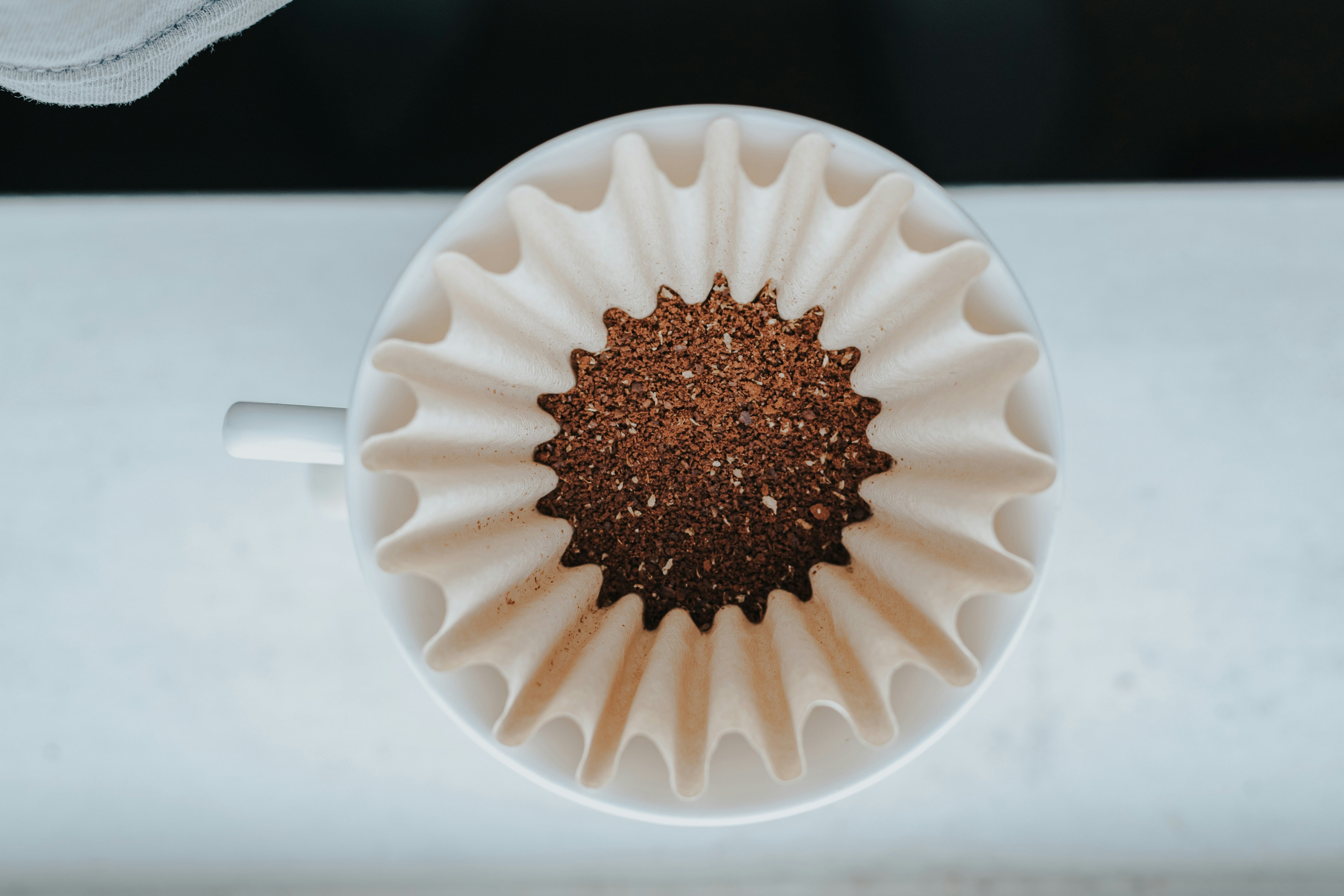
Brewing a V60 looks simple from the outside, and in some ways, it is: good beans, the right ratio, and a little patience get you most of the way there. The rest comes down to a handful of details that make the difference between a good cup and a great one.
This guide walks through one reliable method for brewing V60 pour-over coffee. It's a solid starting point whether you're brand new to filter brewing or want to get more precise with a method you already half-know.
Use it as a starting point, not a rulebook.
What you need:
|
Step 1: Pick the right coffee
The V60 doesn't hide much. Whatever's in the beans ends up in the cup. That is part of why it's so satisfying, and why the coffee you pick matters so much.
Light to medium roasts tend to work best. The slower, more controlled extraction of a pour-over gives fruit notes, floral qualities, and natural sweetness room to come through in a way darker roasts don't always allow.
That said, there's no rule against it. A medium-dark or darker roast through a V60 gives you something richer and more full-bodied: less brightness, more depth. It depends on what kind of cup you want to sit down with.
If you're new to filter brewing, a good starting point is a coffee roasted specifically for filter or described as fruity, sweet, or floral. Those qualities tend to come through in a V60 in a way they simply can't in an espresso machine.

Our Current Brew: PearlPearl is made with Tanzanian peaberry beans, a natural curiosity where only one round, dense bean forms inside the coffee cherry instead of the usual two. Because heat moves around it more evenly during roasting, what ends up in your cup is unusually focused and clear: blackcurrant jam, lemon zest and Muscovado, with a silky body and bright, juicy acidity. It's a coffee that rewards slower brewing. That's why the V60 is a natural fit. A note on what we're brewing with as we write this. Most of our roasts are limited lots. In case Pearl is no longer here when you read this post, we always have a few other coffees suited to exactly this kind of cup. Take a look at the collection if you want to try what we are describing. |
Step 2: Rinse and warm up
Before the coffee comes into play, place the paper filter in the V60 and rinse it with hot water. This removes any papery taste and brings the dripper and carafe to the right temperature.
Pour out that water. Sounds obvious, it's so easy to forget.
Step 3: Grind size and dose
For the V60, we're grinding medium-fine. A little coarser than espresso, but noticeably finer than a French press. A good reference point: the grounds should feel like coarse sea salt.
15g of coffee to 250ml of water is a solid starting ratio. If you want a little more body, go up to 16g. If you prefer something brighter and cleaner, try 14g.
The goal here is a calm, steady drip, neither rushed nor stuck.
What grind size actually does:Too coarse → water rushes through → coffee tastes thin or sour Too fine → water struggles through → coffee tastes bitter or flat |
Step 4: Bloom, let the coffee breathe

Place your cup or carafe on the scale, dripper on top, tare to zero.
Now pour about 30–40ml of water in a gentle circle over the grounds, just enough to saturate everything evenly. Then wait 30 seconds.
During this time, the coffee releases CO₂: you'll see it swell and bubble slightly. That's a good sign. The fresher the coffee, the more active the bloom.
Step 5: Pour slowly and steadily

After the bloom, continue with the remaining water, up to 250ml total. Pour slowly in circles, moving from the center outward. You want the water to have time to move evenly through the coffee, not cut a channel straight through it.
Two pours work well:
The coffee should finish draining in about 2:30 to 3:30 minutes. |
Step 6: Taste first, then adjust
Once you have your final cup, enjoy it first, and be mindful about how it tastes. Depending on what you are looking to find and taste from the coffee, you can use this guide to adjust your next recipe 😉
How does it taste? |
What to change |
|---|---|
| Thin, watery, sour | Grind a little finer |
| Bitter, heavy, flat | Grind a little coarser |
| Slightly dull, but okay | Try a higher water temperature |
| Good, but too strong | Use slightly less coffee or more water |
Always change one thing at a time.
That way you'll know what made the difference.
A good V60 doesn't have to be perfect to be amazing.
It's about experiencing the ritual of making your coffee by hand, connecting all your senses, and experimenting. If the coffee tastes good, drips calmly, and feels repeatable, you're there. Everything beyond that is yours to experiment with.
Happy Brewing!

Share:
Interview: Peter Kulcsar | The Bean Geek
Cold brew guide: Brewing at Home