
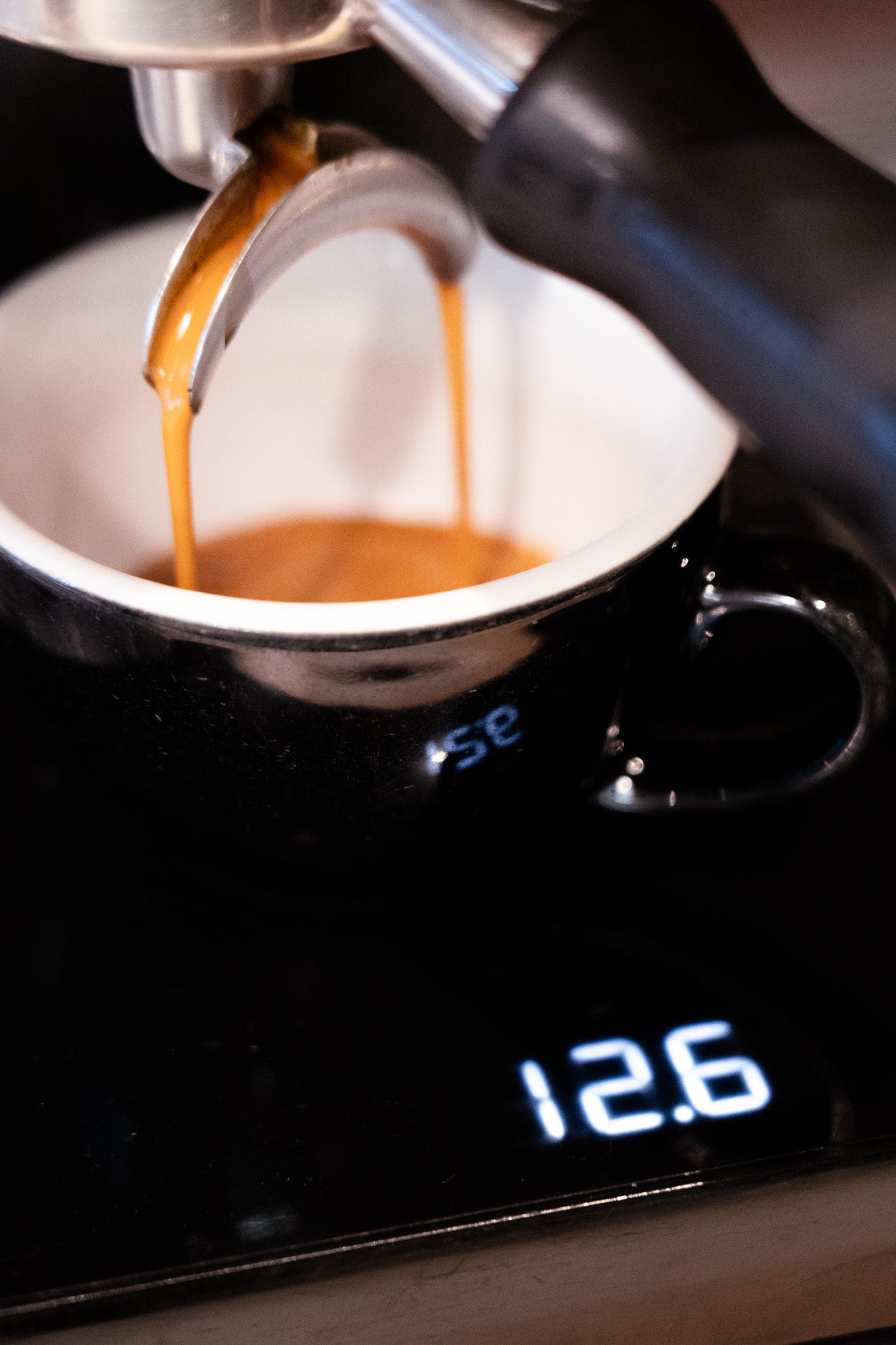
Dialling in espresso can sound technical, even intimidating. But at its core, it’s simply the process of adjusting a few variables so your coffee tastes balanced, sweet, and satisfying.
There’s no single “correct” way to dial in. There are many recipes, styles, and preferences. This guide shares one approachable method that’s especially helpful if you’re early in your home espresso journey.
Use it as a starting point, not a rulebook ☕️
A Quick Mindset ShiftThe often-quoted “1:2 in 30 seconds” guideline is just that, a guide. It’s useful, especially at the beginning, but it’s not the finish line. Some coffees taste best faster, slower, shorter, or longer. The sooner you let go of chasing exact numbers, the easier (and more enjoyable) dialling in becomes. Let taste lead. Numbers help, but they don’t drink the coffee. |
The Four Points That Matter Most
When dialling in espresso, there are four main things you can adjust:
- Dose – how much dry coffee goes into the basket (grams in)
- Brew ratio / Yield – how much espresso comes out (grams out)
- Grind size – which controls how fast or slow the shot runs
- Time - how long does the espresso flow out (extraction time)
To stay sane, change only one variable at a time.
Step 1: Start by choosing a dose that suits your basket.

Most home and café setups use somewhere between 18–20g for a double espresso. For this guide, we’ll use 18g as an example.
Why dose matters:
- Underdosing can lead to a loose, soupy puck and uneven flow
- Overdosing can cause the puck to hit the shower screen, disrupting extraction
Once you choose a dose, stick with it while dialling in. This makes everything else easier to control and tweak.
☝️ A few helpful notes:
|
Step 2: Get the Coffee Flowing Nicely

You want the espresso to flow at a calm, steady pace - not rushing, not struggling
Think of it like this:
- If the coffee rushes out quickly and splatters, the water didn’t spend enough time with the coffee
- If the coffee drips very slowly, the water had a hard time getting through
We’re aiming for something in between. A smooth, steady flow that feels unhurried and flows like warm honey.

You don’t need to chase exact seconds here. Aim to a 1:2 ratio so around 36g of espresso out of 18g of beans.
At this stage, you’re just trying to get the shot to feel reasonable, not extreme in either direction.
Once the flow looks calm and steady, you’re ready for the next (and best) step: tasting and fine-tuning.
☝🏽What grind size actually doesYour grind controls how easily water can pass through the coffee:
So:
|
Step 3: Taste, Then Refine the Grind
Once your espresso is flowing smoothly, the next step is simple:
Taste the coffee, then decide if the grind needs a small adjustment.

At Codos, we tend to keep the recipe itself consistent and focus on refining the grind to bring the coffee into balance. This keeps things repeatable, and helps you understand what changes from one cup to the next.
Here’s how to read the cup:
-
If the espresso tastes sharp, sour, or a little flat, the water likely moved through the coffee too quickly
→ try grinding slightly finer
-
If the espresso tastes dry, bitter, or heavy, the water may have struggled to pass through
→ try grinding slightly coarser
Make changes in small steps. Even tiny grind adjustments can have a big impact.
Stop When It Tastes Right

As you adjust, pay attention to how the coffee changes:
- A slightly finer grind can bring out more sweetness, body, and connection between flavours
- Too fine, and water can start taking shortcuts through the coffee, leading to uneven extraction and dull flavours
A helpful rule of thumb:
Go finer until the coffee stops improving - then step back one notch. That setting is often where the coffee feels most balanced and expressive.
And don’t worry if the shot takes a little longer than expected. Some coffees, especially lighter roasts, simply need more time to shine.
A Quiet Reminder
Dialling in doesn’t need to be complicated to be thoughtful.
If the coffee tastes good, flows calmly, and feels repeatable, you’re there.
Everything beyond that is optional.
Our secret weapon and biggest recommendation is to keep an espresso journal. When you buy a new bean write it down and create a little chart so you can track the settings and adjustments you used and what you felt/tasted. This also makes the ritual more mindful and helps you reflect and hone in your skills. We do it in our shops every time.
This can be done with any type of notebook or journal and can be as elaborate, technical or creative as you want. It’s also a really cool place to include pictures of your latte art and doodle. Our current setup looks like this:
| Beans + Roast Date | Date | Grams in | Grams out | Time | Feels (taste, smell, looks) |
|---|---|---|---|---|---|
Teilen:
Tail-Waggingly Thoughtful Gifting for the Holidays
Interview: Peter Kulcsar | The Bean Geek