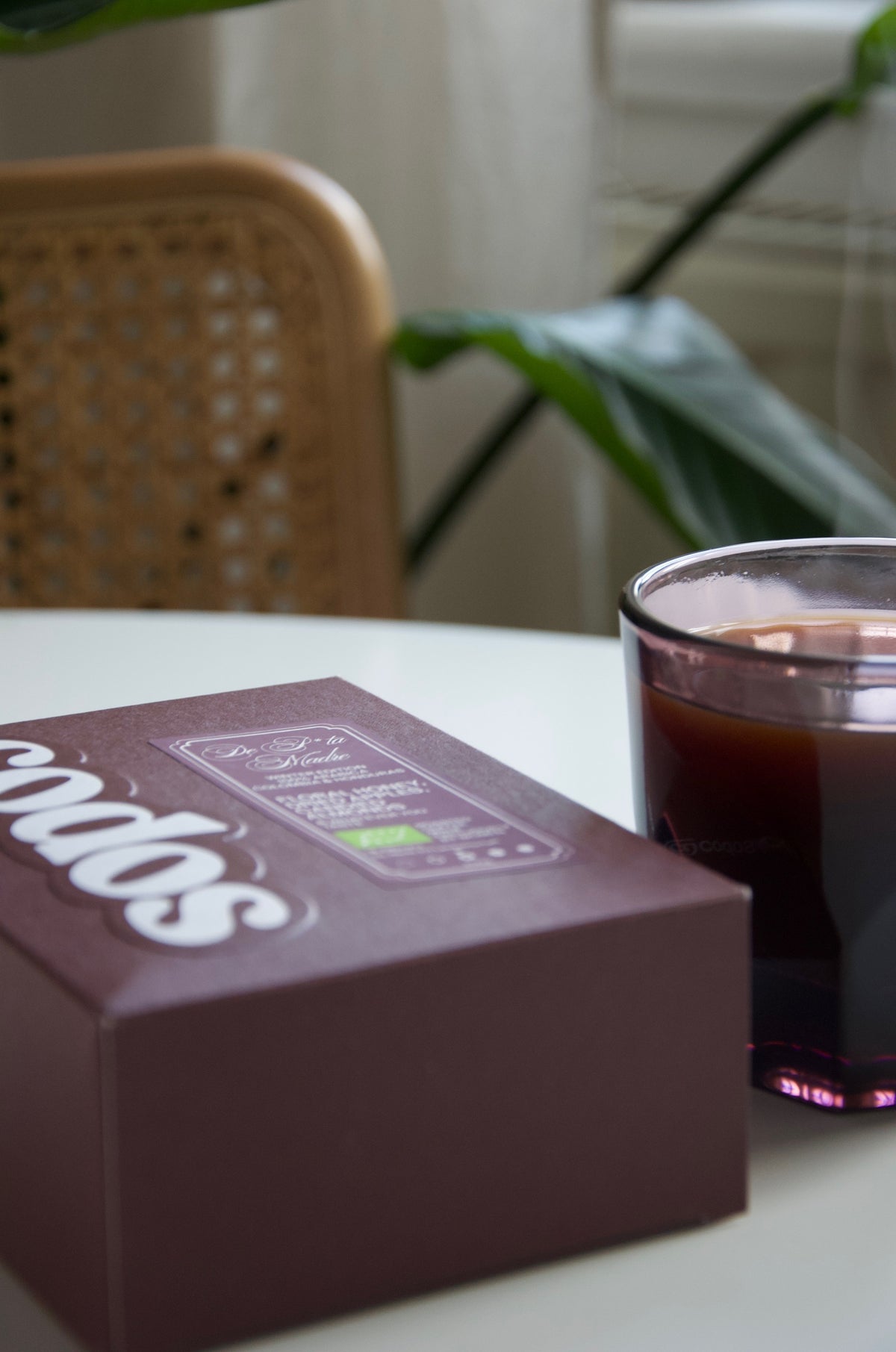


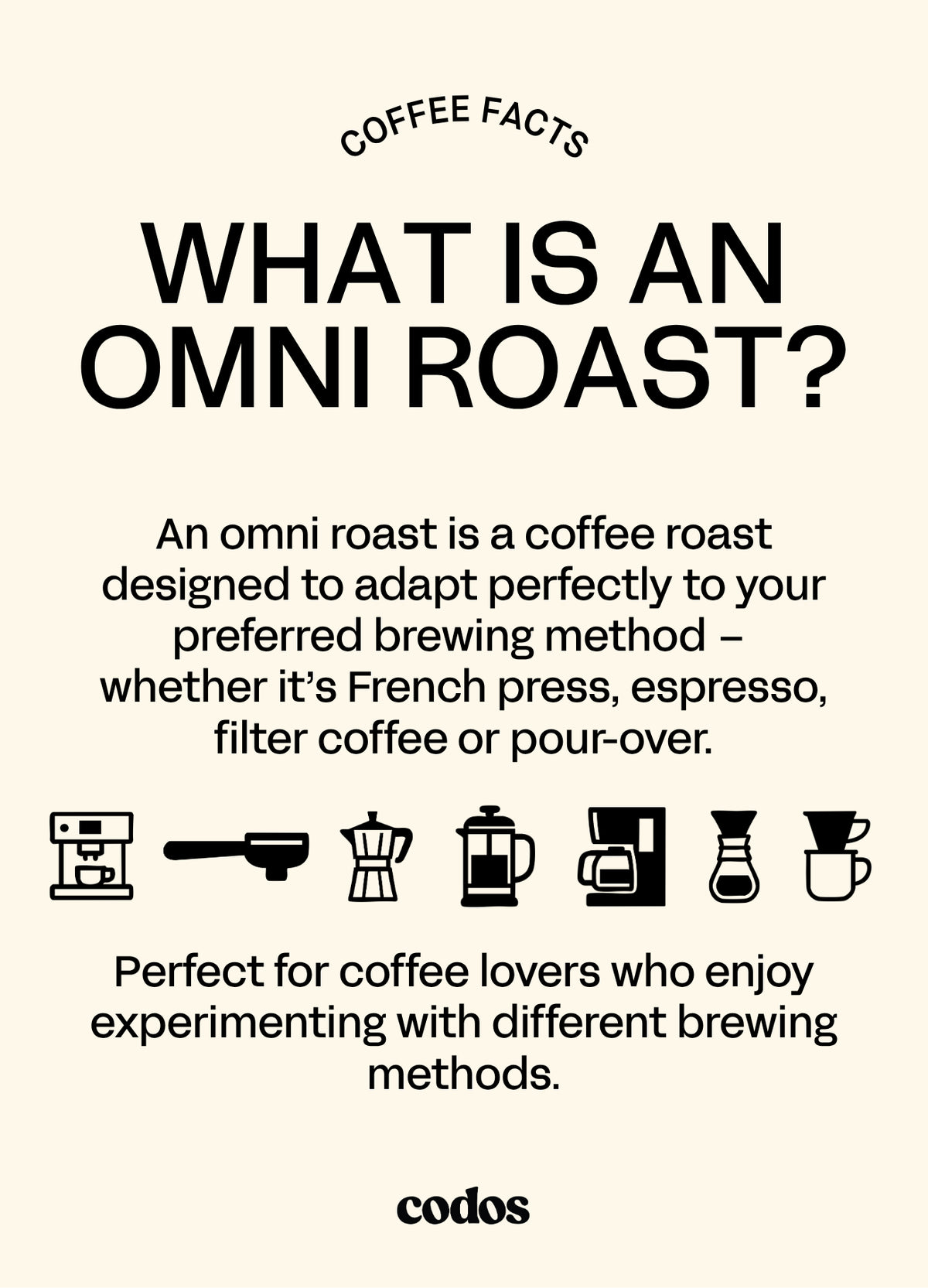
DE P*TA MADRE - OMNI - Winter Edition
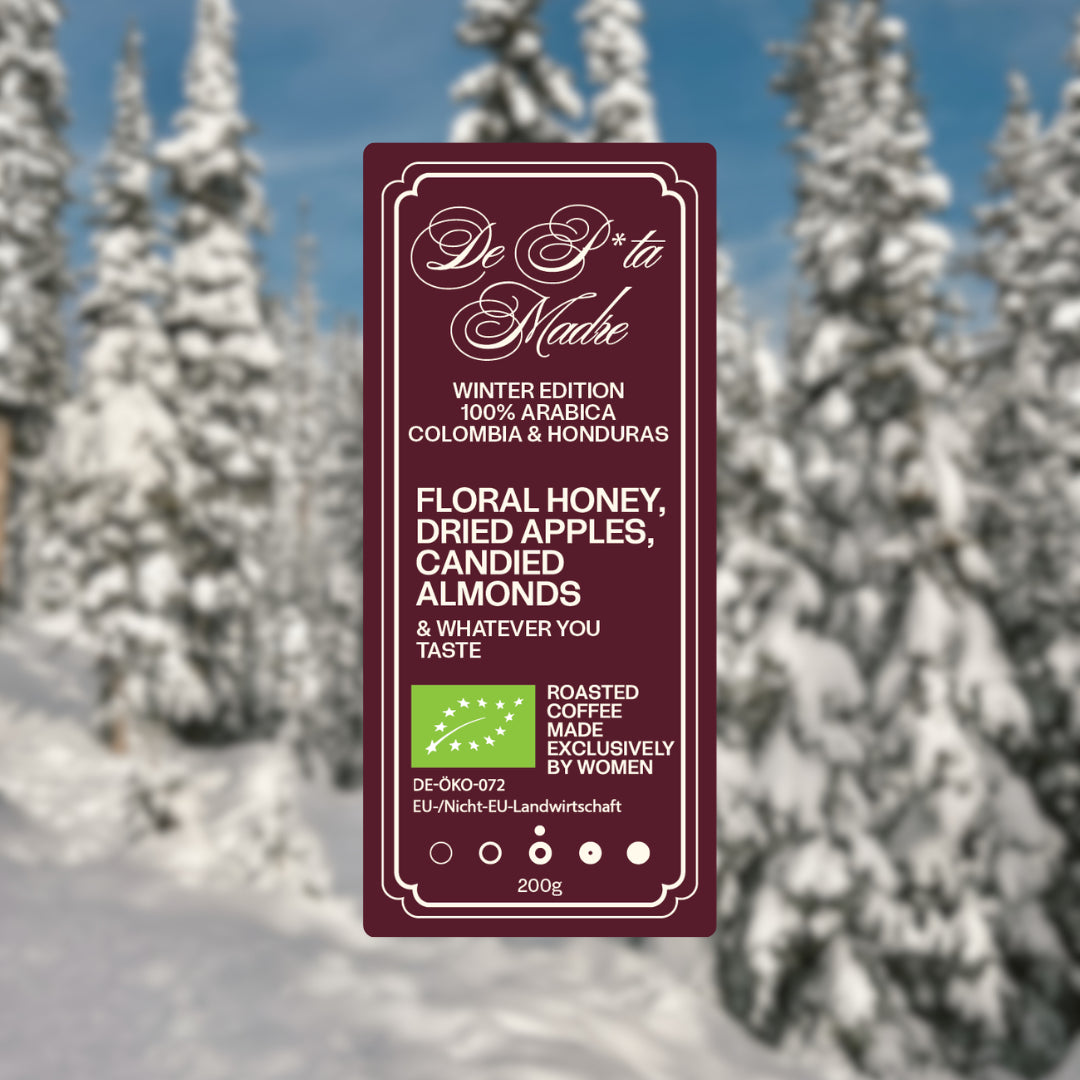
What we taste:
Floral Honey, Dried Apples, Candied Almonds
Röstgrad:

Fits great with
DE P*TA MADRE - OMNI - Winter Edition
If you have any questions, you are always welcome to contact us. We'll get back to you as soon as possible, within 24 hours on weekdays.
-
Shipping Information
Use this text to answer questions in as much detail as possible for your customers.
-
Customer Support
Use this text to answer questions in as much detail as possible for your customers.
-
FAQ’s
Use this text to answer questions in as much detail as possible for your customers.
-
Contact Us
Use this text to answer questions in as much detail as possible for your customers.
DE P*TA MADRE - OMNI - Winter Edition
Variety:
Process:
This has been a f*cking hard year. De P*ta Madre is for closing the door on it and walking into 2027 wide awake. Raise a cup to the women who made it, and to yourself for making it this far.
About the name: across part of the Spanish-speaking world, “de p*ta madre” is what you say when something is excellent. Word for word, it sounds rude, but in everyday Spanish it’s high praise. This coffee is de p*ta madre, and so are you 😉
Women made this coffee from start to finish. At Santa Maria in Santander, Colombia, 30 women run the farm. Mildred Daza leads the project, and Luz, their Q-grader, checks the quality of every lot. In Marcala, Honduras, the women of the COMSA cooperative grew the rest. Back home, women roasted it, designed the pack, and are bringing it to you.
Both farms put more back into the land than they take. Over 25 years, the Daza family turned ground, once too dry for coffee, into a farm shaded by more than 15 tree species. Here cherries ripen slowly, and birds have a home. In Marcala, COMSA farmers build soil life and forest cover on the Montecillos mountain range, and their Fairtrade premiums help fund a school open to every child in the area. Both lots are organic and hand-picked.
We chose these two origins to lift each other. In the cup, floral honey comes first, with dried apples and roasted almonds rounding it out and giving it a winter feel.
It comes in a box with a rustic feel you’ll want to keep, plus a postcard with space for a few words of your own. So it’s ready to gift to someone who got you through this year. Or keep it for yourself. It’s a limited batch, so once it’s gone, it’s gone until next year. You’ll also find it at the heart of our Christmas box.
Origin
Engagement

Try our bestsellers